From 1861 to the turn of the 20th century
In the early 1860s, there were three police departments in Finland, in Turku, Helsinki, and Vyborg. The police departments were headed by the governor of each province. In other cities, traditional city servants were in charge of law enforcement, but some cities were also beginning to establish local police departments as part of the local administration. In the countryside, crown sheriffs and their assistants were in charge of policing.
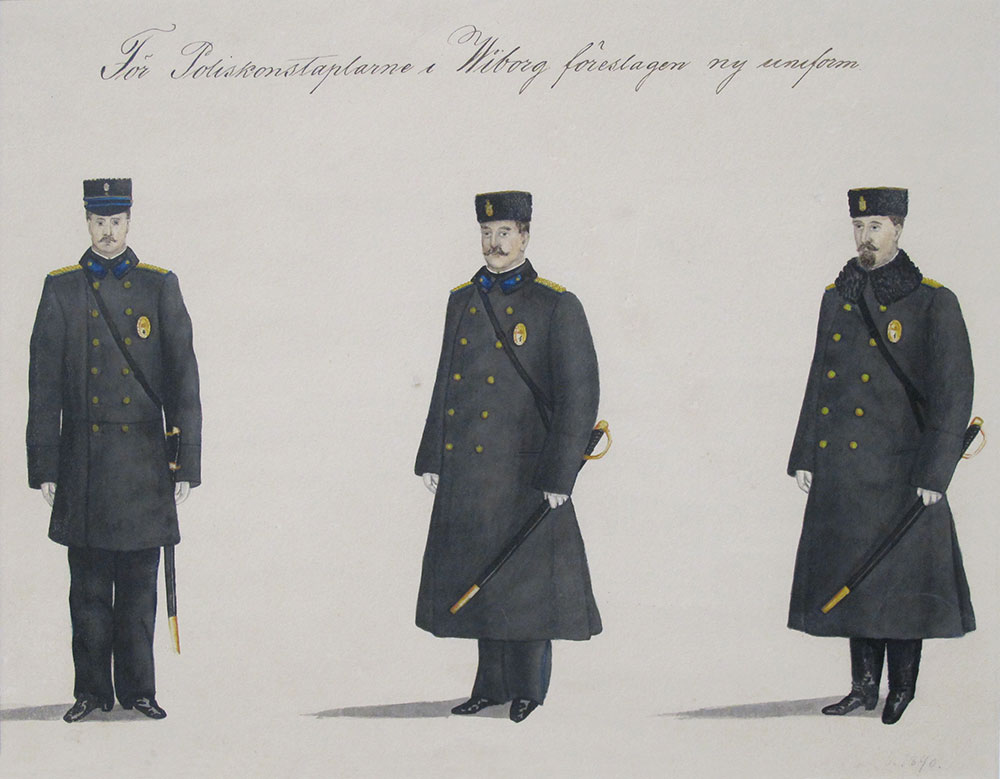
Although the police departments of Turku, Helsinki and Vyborg were subordinate to the state rather than the cities, the police departments had regulations of their own regarding police uniforms. The uniforms of countryside sheriffs and their assistants followed the general regulations for provincial servants. However, at times, certain groups of servants wore distinct uniforms; for example, in 1850, sheriffs’ assistants in charge of roads and bridges were given a uniform of their own.
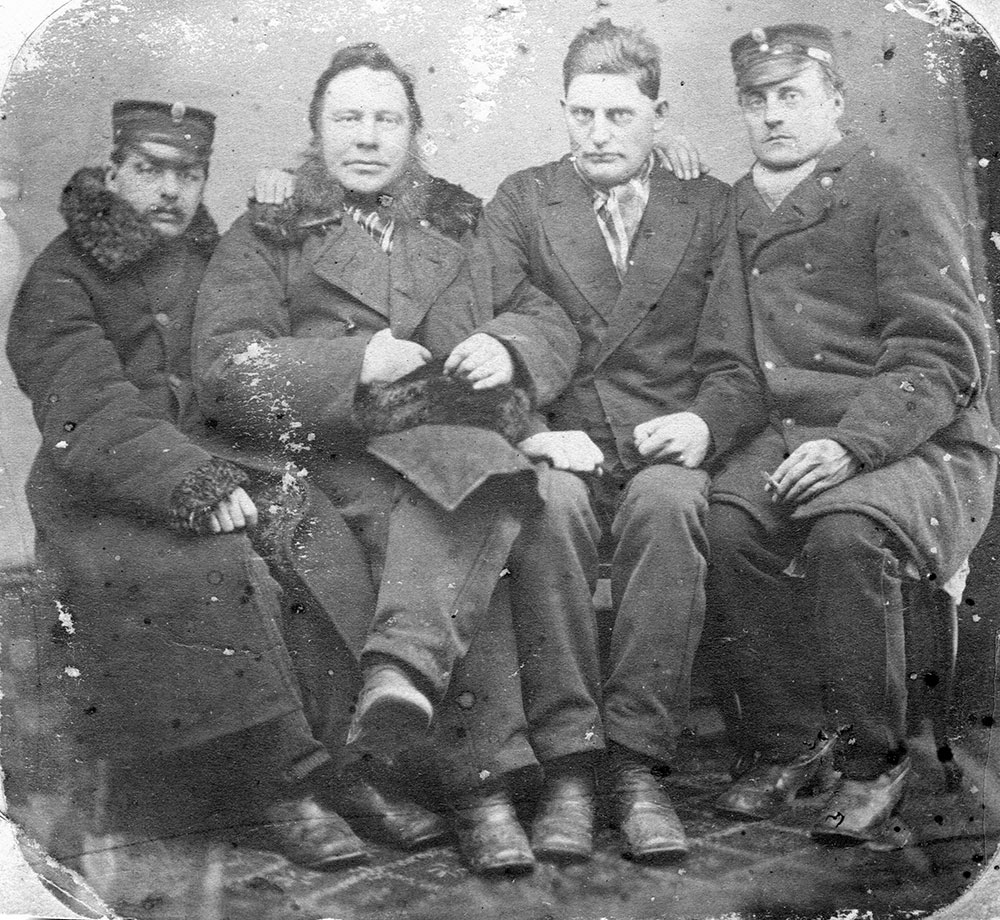
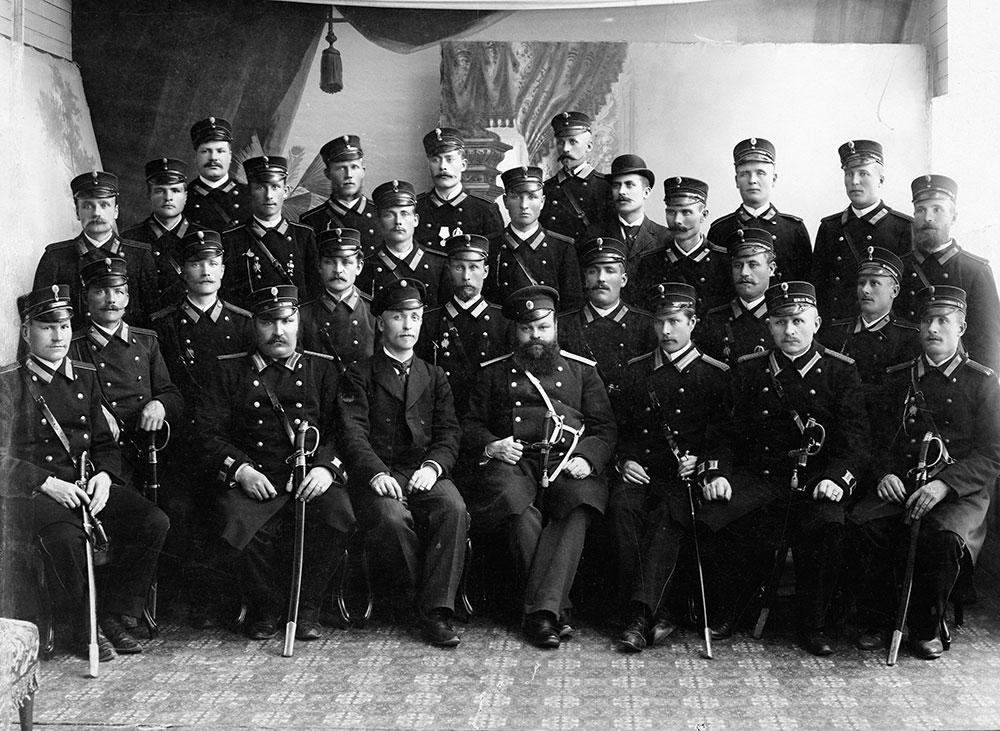
In the latter part of the 19th century, police work in the cities was, having traditionally been sporadic in character, becoming increasingly regular and professionalised. Police uniforms were moving toward greater uniformity. The uniforms adhered to the fashion of civilian uniforms, but their design was also increasingly influenced by military uniforms.
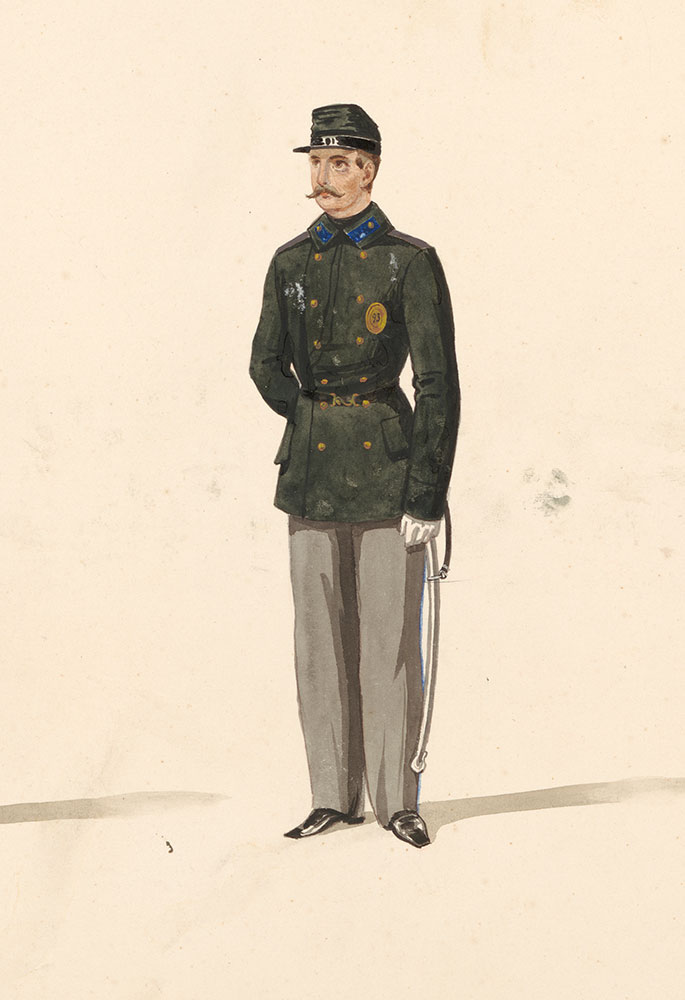
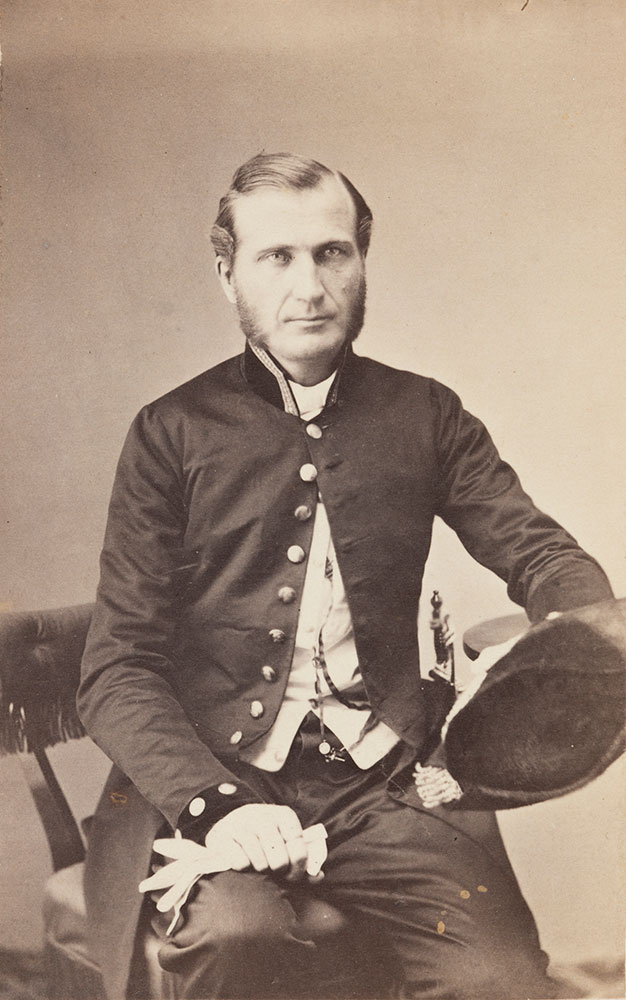
A new statute on the tasks of the Helsinki Police Department was issued in 1861. The department was also given a new uniform. The long dark green uniform coat was a surtout, a type of coat that had replaced the tailcoat among civil servants in the 1850s. The trousers were long and the overcoat made of dark grey baize. There was also a summer coat of plain-woven fabric as well as three kinds of headwear: senior officers wore a bicorn, patrolmen either a tall shako made of black baize or a lower dark green kepi. The latter two were originally military caps.
The 1861 uniform of the Helsinki Police Department set the standard for police uniforms in other cities. No major changes were made to the uniform until late in the century. The uniforms used in the provincial capitals were often used in other cities in that province: for example, the police uniforms of Pori were the same as those used in Turku, and those of Raahe the same as those of Oulu.
A major shift in countryside law enforcement occurred in 1891, when the various assistants of the sheriffs were replaced by police constables. Each crown sheriff was to have at least one constable to assist him. The new countryside constables had no official uniform until 1900, when all Finnish countryside constables were given a common uniform.
The countryside police uniform of 1900 included a dark green baize coat, the left front part of which was fastened over the right side with concealed buttons. The collar and cuffs had orange edges, and the cords on the shoulders were of the same colour. The trousers were dark blue and had orange piping. Boots were worn with the uniform. The overcoat was dark grey and had dark green collar straps. The uniform statute of 1900 only changed the uniforms of countryside sergeants and constables; crown vogts and sheriffs continued using the uniform from the late 19th century.
The cut and style of the countryside police uniform of 1900 were similar to contemporary Russian uniforms. Giving the Finnish countryside police a new uniform served two purposes: to meet the demand for a new uniform, but also to integrate Finnish law enforcement and society into the Russian Empire.