Skip to content
Back
Uniform coats Trousers, footwear and belts Overcoats Hats and caps Female police officers Shirts and sweaters Coveralls and riding suits Rainwear and reflective vests
From Breeches to Coveralls - The History of Finnish Police Uniforms
Introduction
  • The significance of the police uniform and its various changes over the centuries
  • Finnish law enforcement uniforms prior to 1861
History of the uniform
  • From 1861 to the turn of the 20th century
  • 1900 - 1917
  • 1918 - 1930
  • The 1930s
  • The 1940s
  • 1951 - 1970
  • The 1970s
  • The 1980s
  • The 1990s
  • The 21st century
Uniforms
  • Uniform coats
  • Trousers, footwear and belts
  • Overcoats
  • Hats and caps
  • Female police officers
  • Shirts and sweaters
  • Coveralls and riding suits
  • Rainwear and reflective vests
Not like this!
  • NOT LIKE THIS!
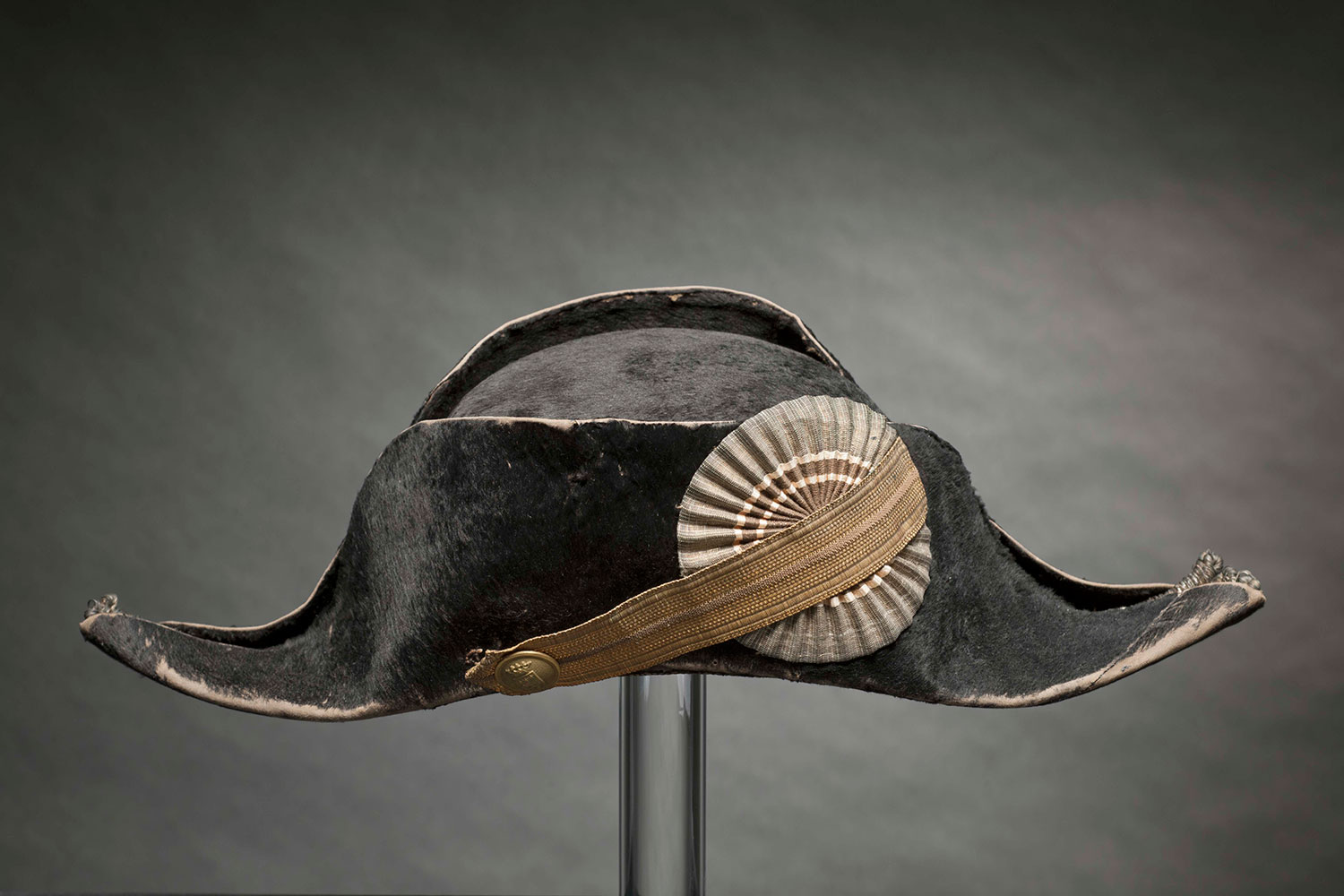
In the 19th century, provincial servants wore a tailcoat with a bicorn as their uniform. A similar bicorn, part of the uniform of 1861, was worn by senior officers of the Helsinki Police Department. Toward the end of the century, peaked caps became increasingly common, and the hat was from then on mostly used on festive occasions. Hat of Carl Daniels, Sheriff of Orivesi, late 19th century. Image: Museokuva Matti Huuhka.
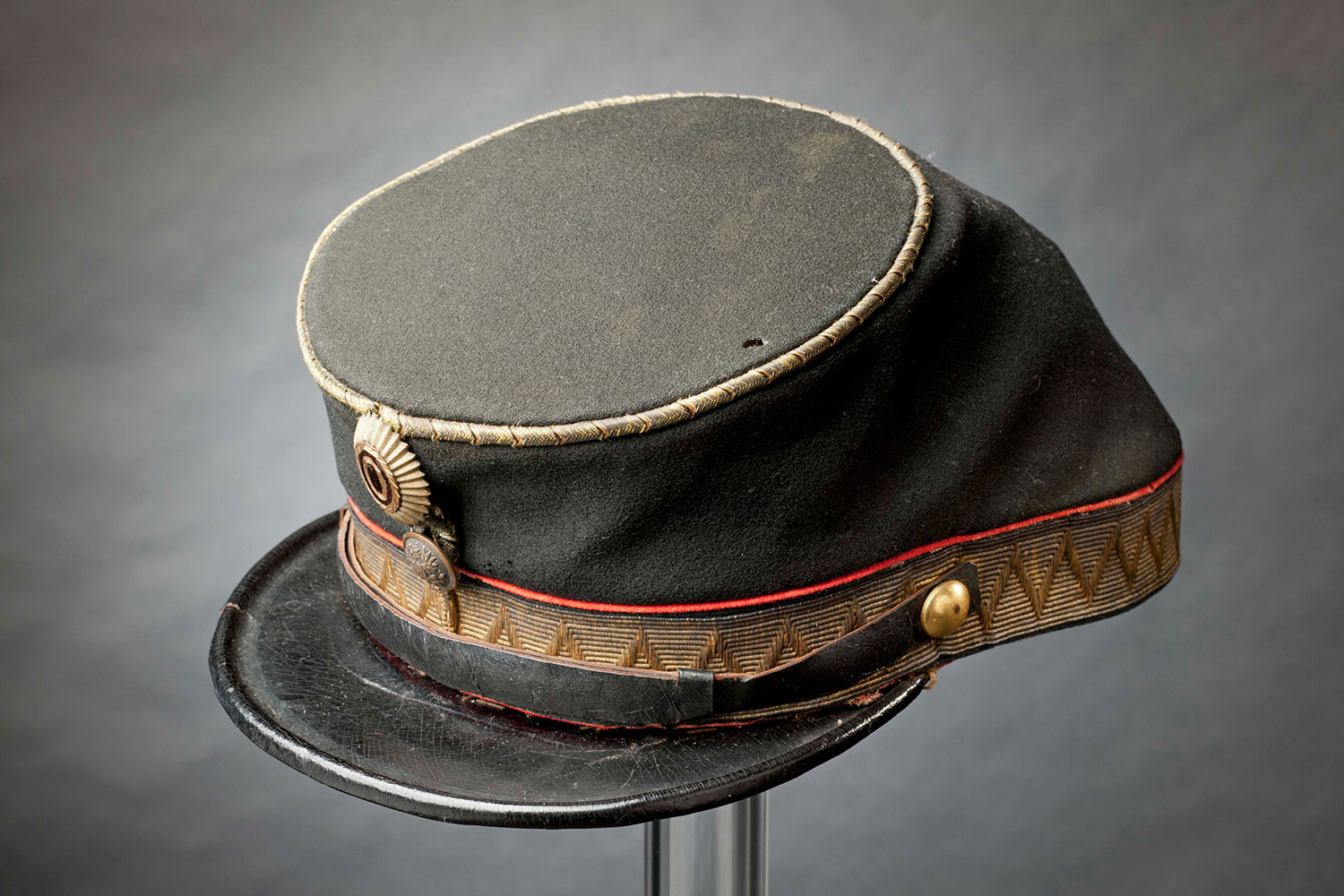
The peaked kepi was a military-style cap commonly associated with the Crimean War and the American Civil War. In 1861, the kepi was introduced as alternative headwear for officers of the Helsinki Police Department. The front of the cap features an oval cockade characteristic of the Russian era in Finnish history. The button beneath the cockade features the double-headed eagle from the Russian coat of arms. Image: Museokuva Matti Huuhka.
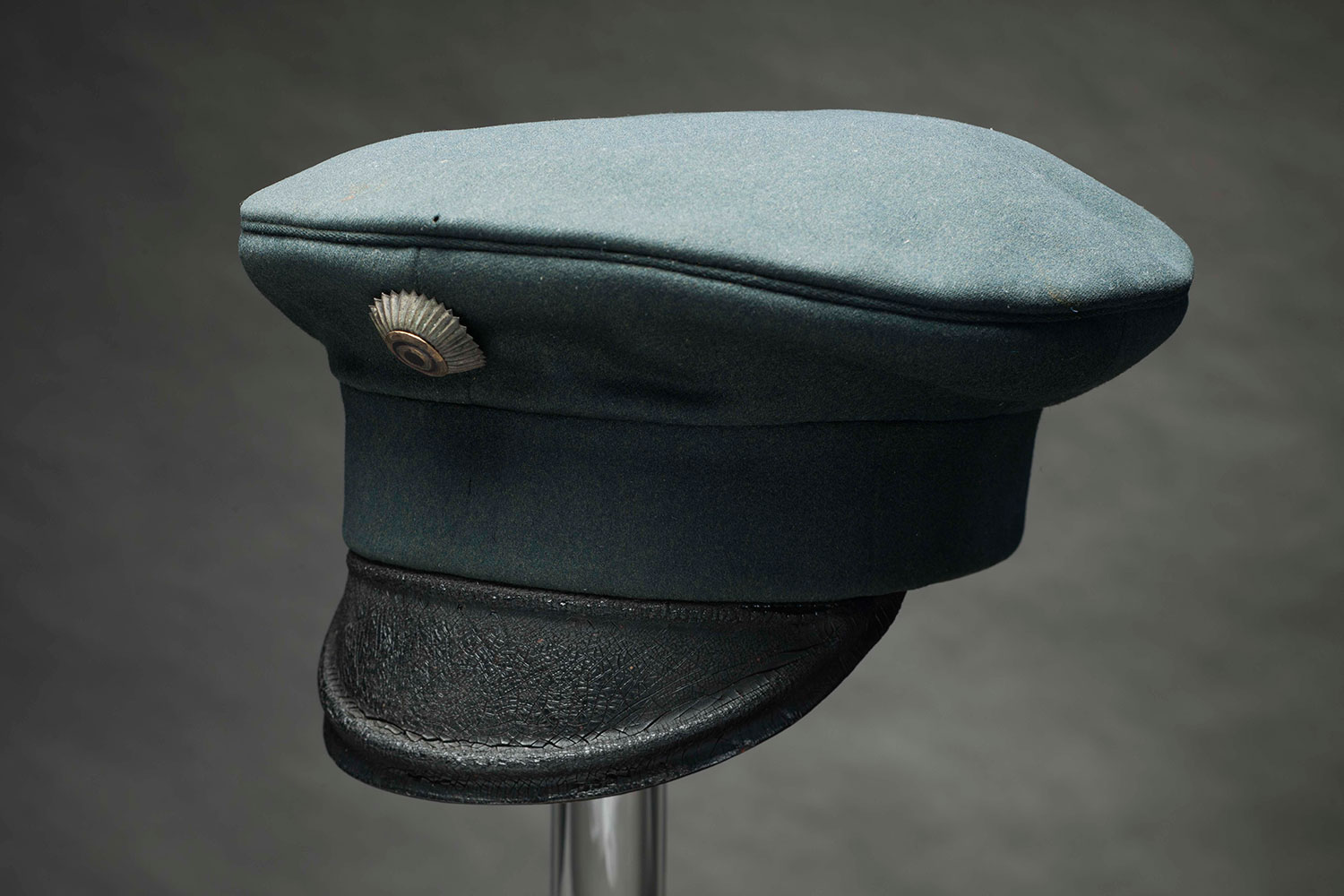
In the late 19th century, countryside sheriffs wore a green peaked cap with a cockade. The Russian dark green uniform colour was characteristic of uniforms worn by provincial servants. This cap belonged to Carl Daniels, Sheriff of Orivesi. Image: Museokuva Matti Huuhka.
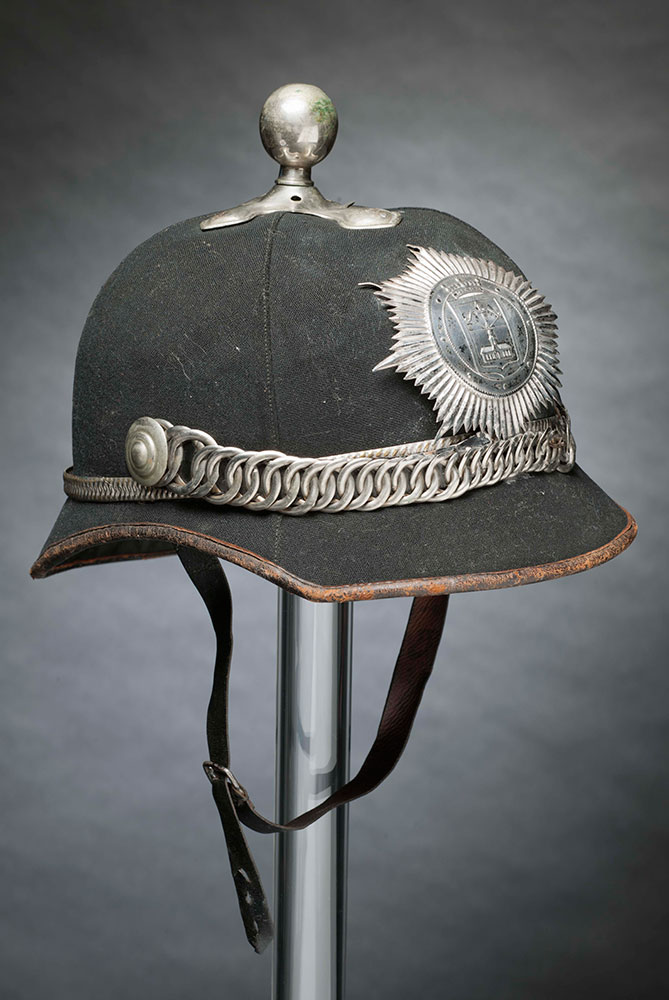
A German-style pickelhaube (spiked helmet) was introduced for urban policemen in 1906. These helmets were covered with black leather or fabric. The front of the helmet featured a silver-coloured star with the city coat of arms. Fabric-covered pickelhaube m1906 from the Kuopio Police Department. Image: Museokuva Matti Huuhka.
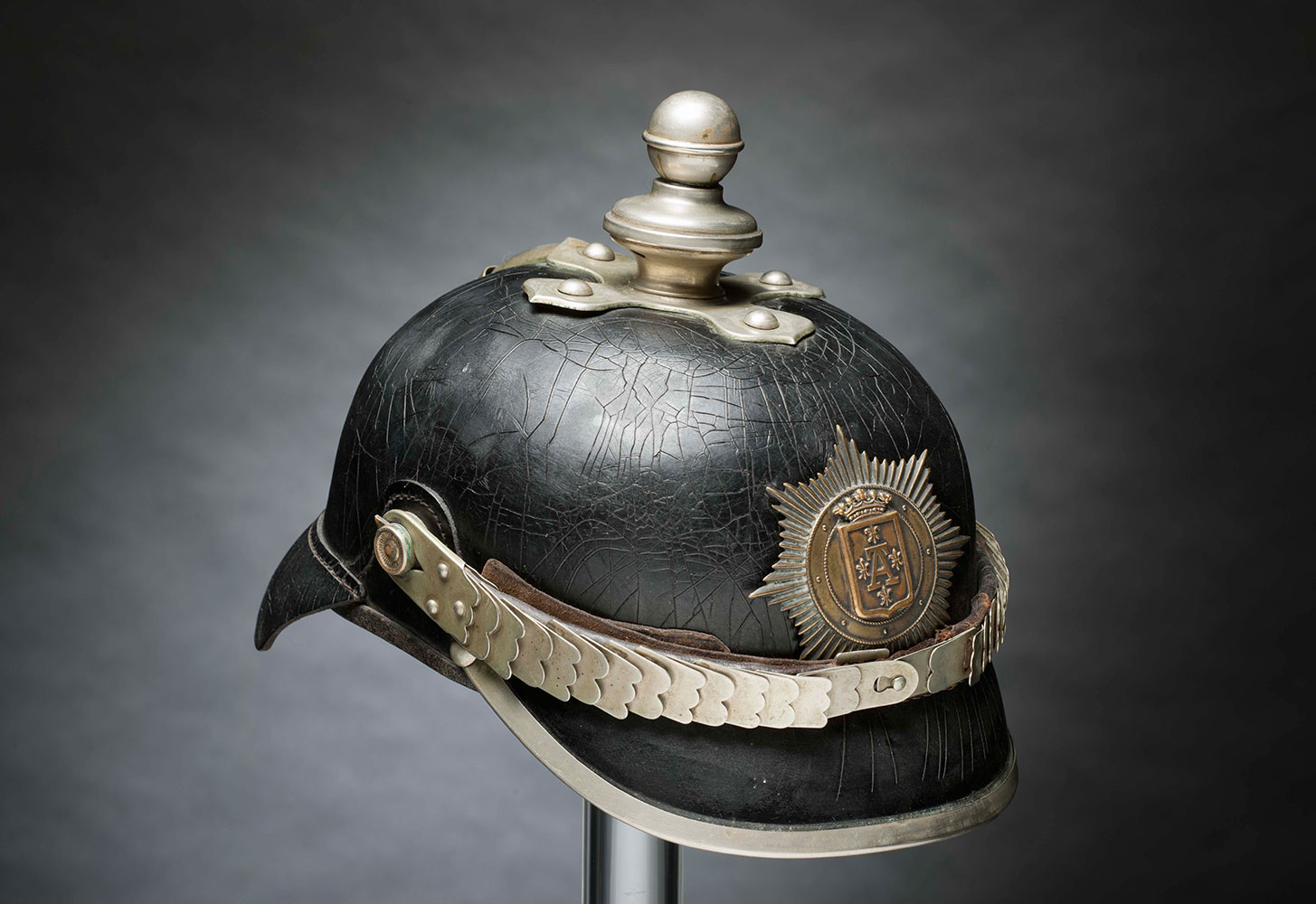
The leather-covered helmets, being lighter and not as hot to wear in the summer, were more popular than the fabric-covered ones. The pickelhaube was used until 1915, when it was replaced with a black cap with blue piping. Pickelhaube m1906 from the Turku Police Department. Image: Museokuva Matti Huuhka.
1 / 30