Skip to content
Back
Uniform coats Trousers, footwear and belts Overcoats Hats and caps Female police officers Shirts and sweaters Coveralls and riding suits Rainwear and reflective vests
From Breeches to Coveralls - The History of Finnish Police Uniforms
Introduction
  • The significance of the police uniform and its various changes over the centuries
  • Finnish law enforcement uniforms prior to 1861
History of the uniform
  • From 1861 to the turn of the 20th century
  • 1900 - 1917
  • 1918 - 1930
  • The 1930s
  • The 1940s
  • 1951 - 1970
  • The 1970s
  • The 1980s
  • The 1990s
  • The 21st century
Uniforms
  • Uniform coats
  • Trousers, footwear and belts
  • Overcoats
  • Hats and caps
  • Female police officers
  • Shirts and sweaters
  • Coveralls and riding suits
  • Rainwear and reflective vests
Not like this!
  • NOT LIKE THIS!
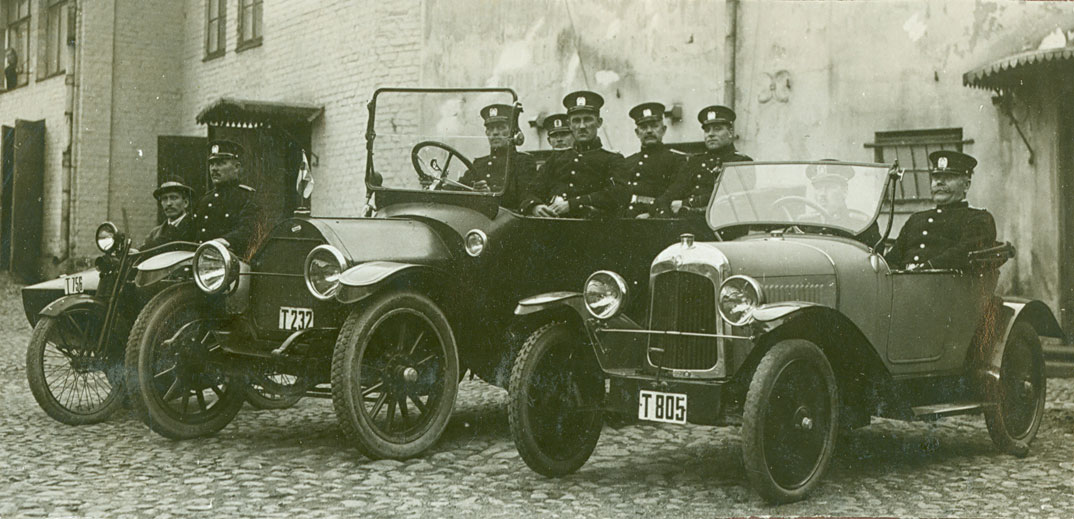
The first police cars were introduced in the early 20th century, and motorcycles followed in the 1920s. This new equipment put certain new demands on the uniform of those operating it. The uniforms of constables driving motor vehicles are first mentioned in the uniform statute of 1929. The motor vehicle unit of the Turku Police Department, 1920s.
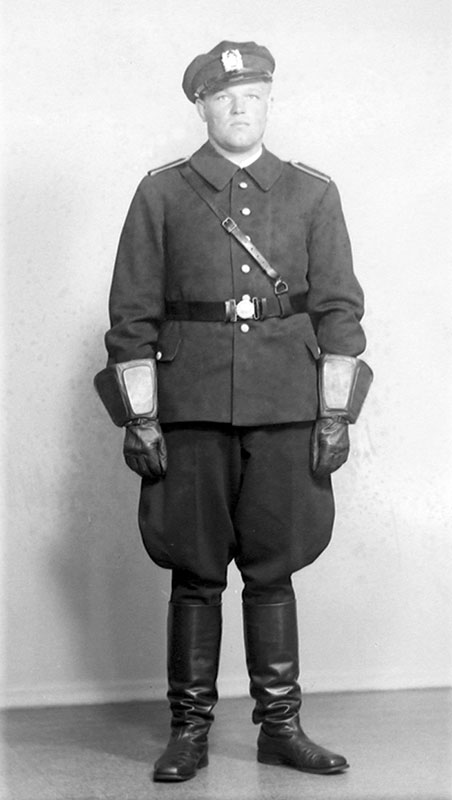
The equipment permitted for officers driving motor vehicles in the early 20th century was often similar to that of mounted officers. The motorcycle officer's uniform included a shorter coat, leather leg warmers, leather trousers and "suitable gloves". Helsinki constable wearing motorcycle gloves, 1930s.
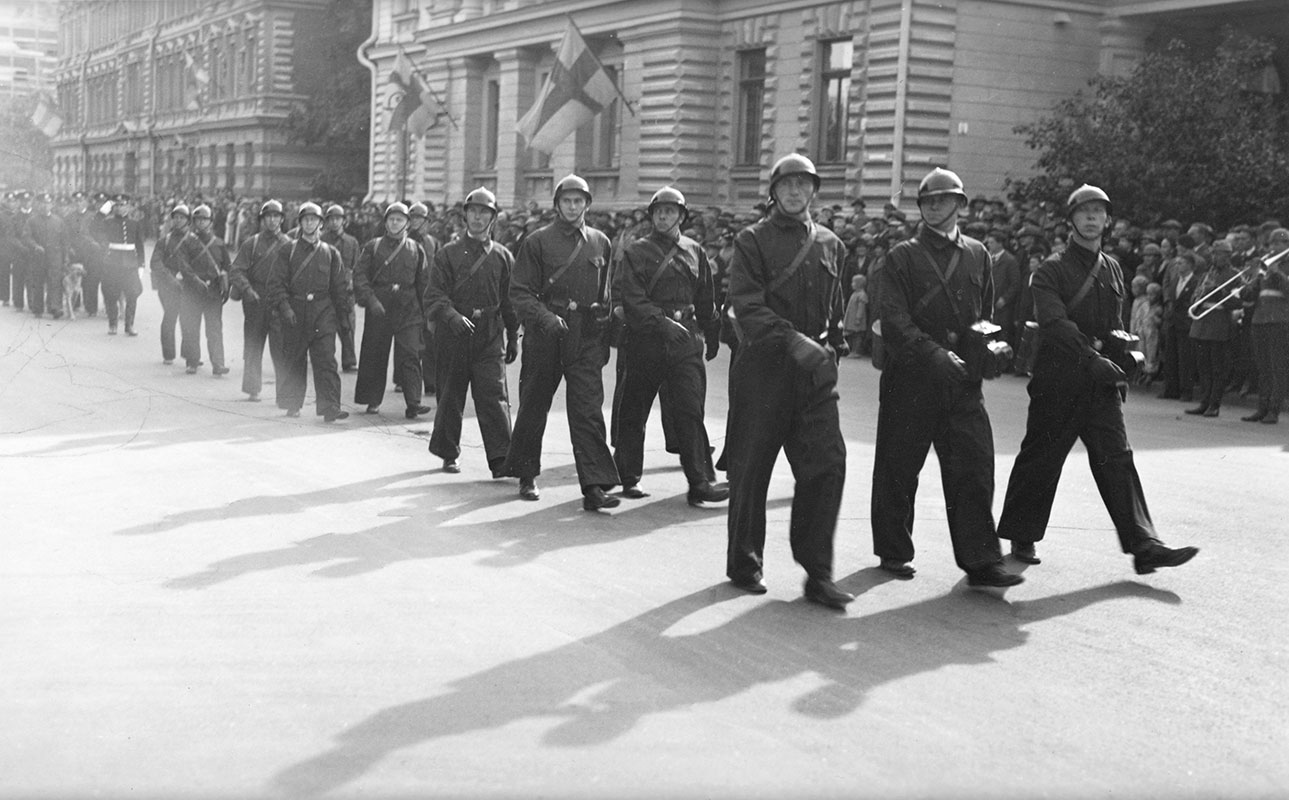
Police coveralls have been used in everyday work since the 1990s, but as a special protective suit, coveralls were already used much earlier. Police officers in gas-protection gear at the 100th anniversary of the Vyborg Police Department on 17.9.1936. The French-style military helmet was part of the parade suit.
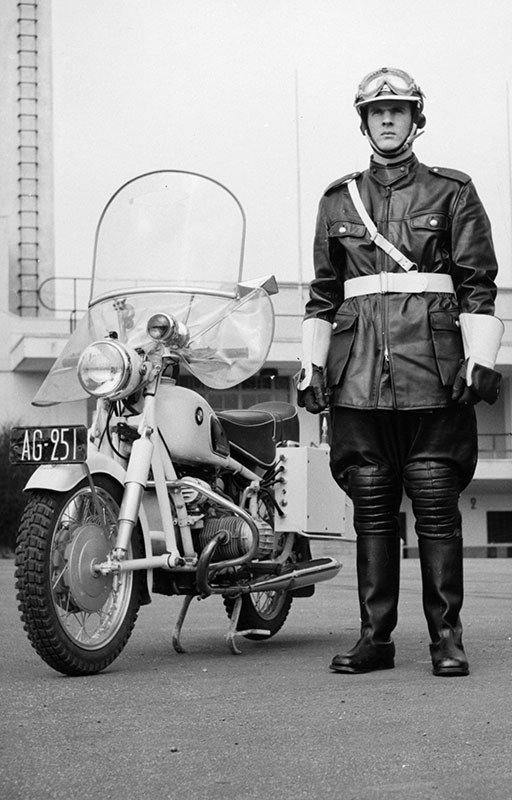
Motorcycles were used to monitor traffic from the late 1950s onward. In 1958, motorcycle officers were given a two-piece leather riding suit worn with a white helmet, a belt with a strap over the shoulder, boots, gloves and motorcycle glasses.
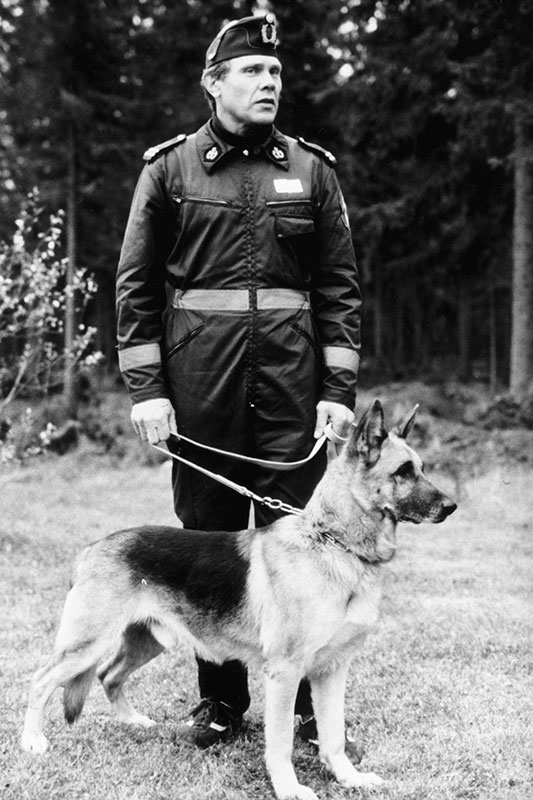
The protective or special suit of 1970 were the first coveralls of the Finnish police. The suit was designed for motorcycle policemen and officers carrying out special tasks. The suit could be made of mixed fabric, leather or artificial leather. In 1973, rank insignia were added to the shoulder straps and a police emblem to the left sleeve. Police dog officer wearing the suit of 1970.
1 / 15