Finnish law enforcement uniforms prior to 1861
The police in its modern form is a relatively recent phenomenon that emerged in Finland, as in other parts of Europe, only in the 19th century. Even before then, however, various kinds of authorities had been responsible for upholding law and order, and the rulers often sought to legislate on what kind of uniforms these authorities should wear.
From the Middle Ages until the 19th century, the law enforcement organisation in cities was different from that of the countryside. In the countryside, where most people lived, police duties were carried out by the sheriff and his assistants. Originally, the sheriffs were appointed by the locals. Later, during Sweden’s period as a great power in the 17th century, the sheriffs instead became servants of the crown and were appointed by the governors of each province. The sheriffs were entrusted with a wide range of duties, and these were typically carried out by various kinds of assistants, including ones in charge of maintaining roads and bridges.
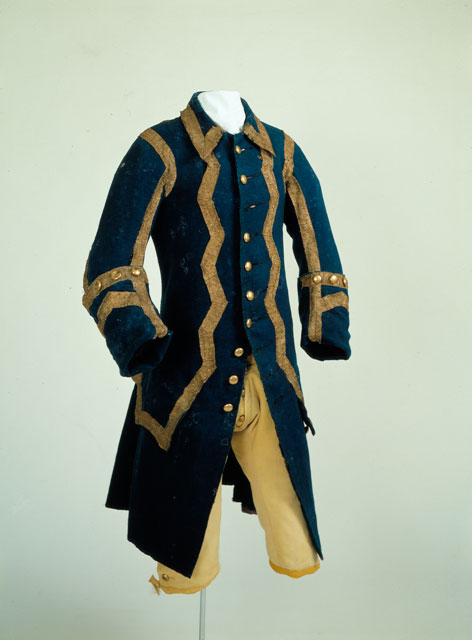
During the 18th century, the Kingdom of Sweden (which at the time included Finland) sought to create a standard for uniforms worn by crown servants. In 1778, a uniform known as the Swedish or national uniform was introduced by King Gustav III, but it was not well-received, being considered less fashionable than uniforms abroad. The so-called provincial uniform of 1802 gained greater popularity; this new uniform consisted of a dark blue redingote coat reminiscent of a morning dress, blue or white breeches, and either boots or shoes.
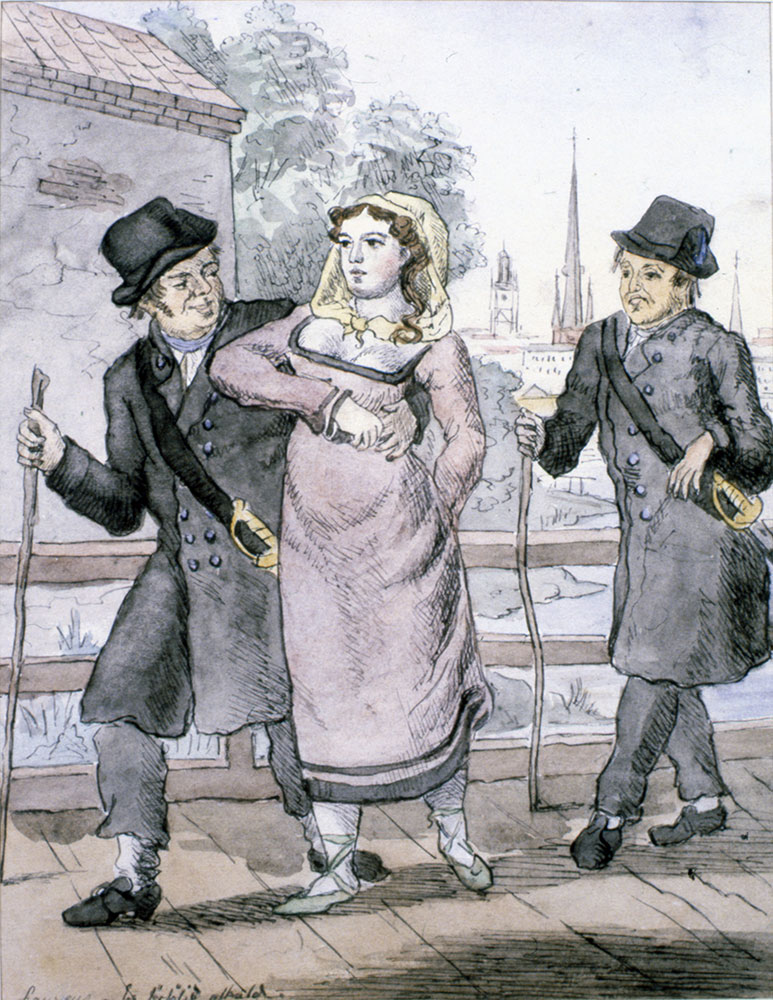
In the towns, the wealthiest people were responsible for upholding law and order. This they accomplished by forming town guards and performing guard duty, particularly at night. Eventually, the community hired regular town servants who were in charge of not only law enforcement, but also of detecting fires and keeping the town tidy.
Since law enforcement was locally organised, each town could decide on what kind of uniform the town guards would wear, leading to considerable variety across the kingdom. In Lappeenranta, town guards wore red uniforms in the early 18th century and grey ones from mid-century onward. The materials used were frieze and baize. According to a source from the 1760s, however, “not even an impressive uniform could make people respect the town guards or law and order”.
Having previously been part of Sweden, Finland became a grand duchy of the Russian Empire following the Russian victory over Sweden in the Finnish War of 1808–1809. The Russian tsars wished to strengthen law enforcement within their newly gained territory, and for this purpose it was necessary to establish police departments in key cities. The first Finnish police departments were thus established in Turku (1816), Helsinki (1826) and Vyborg (1836).
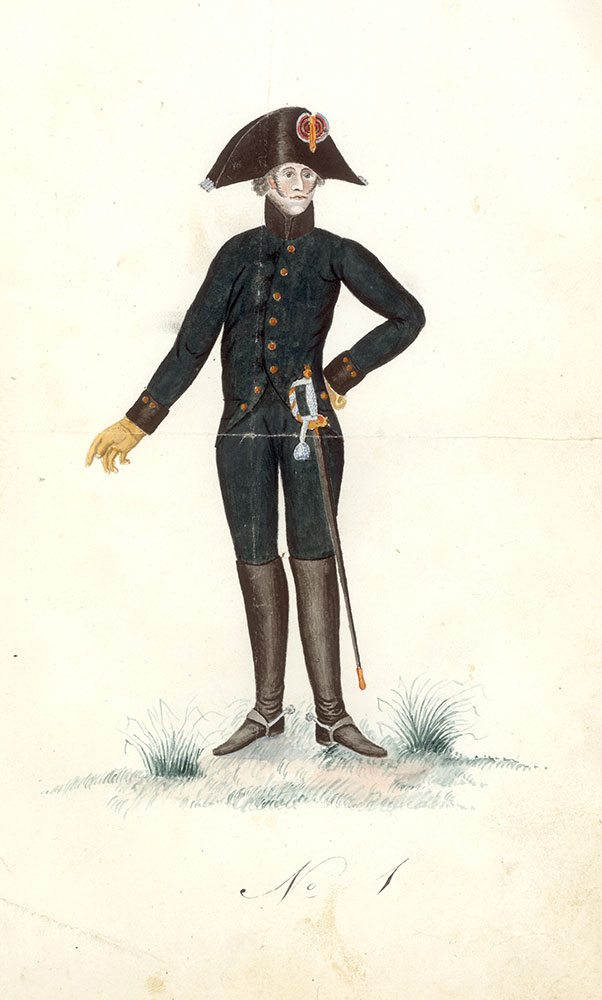
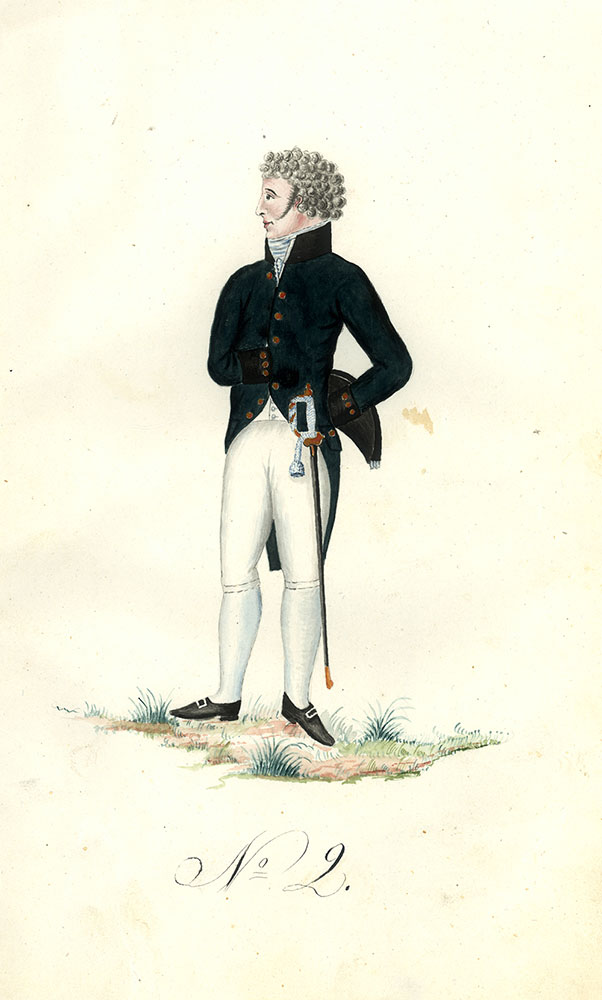
In 1811, Tsar Alexander I decided not to change the dark blue uniform worn by provincial servants in Finland. In 1817, however, a dark green uniform was introduced, this colour being the standard for Russian uniforms. The colour of the collar and hems varied across cities: black in Turku, red and yellow in Helsinki, and light blue in Vyborg.
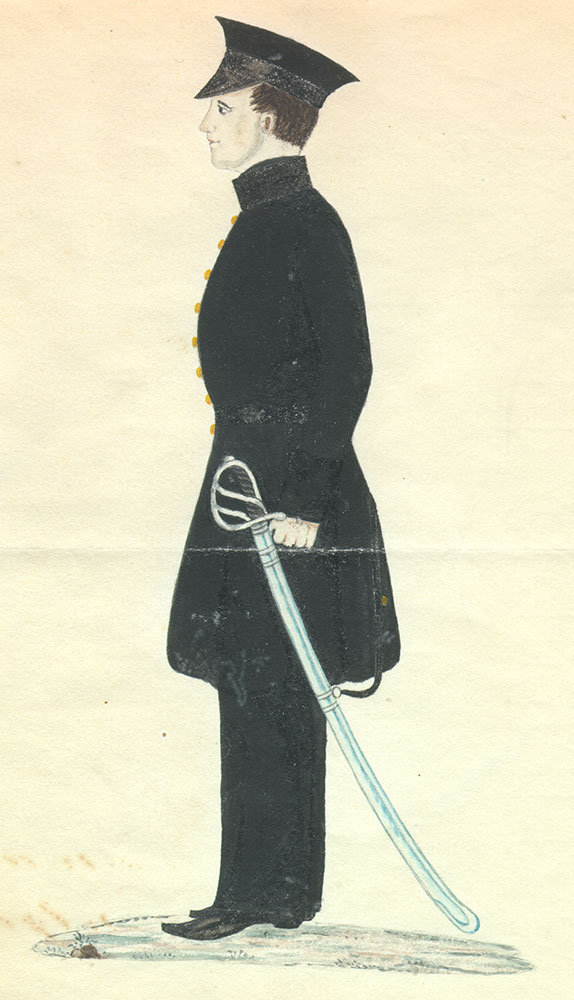
In the mid-1820s, the police departments of Turku and Helsinki were given uniforms of their own. The Helsinki uniform consisted of a green tailcoat with a single row of buttons, grey trousers, a green cap and a grey overcoat. The uniform also included a sabre with a metal handle and a sheath.
Getting into the culture of the uniform did not happen overnight, and during the early years, governors would occasionally reprimand officers for not wearing the uniform correctly. Another problem was the lack of warm overcoats. Although not officially recognised as part of the uniform, furs and felt boots were purchased for wintertime use.