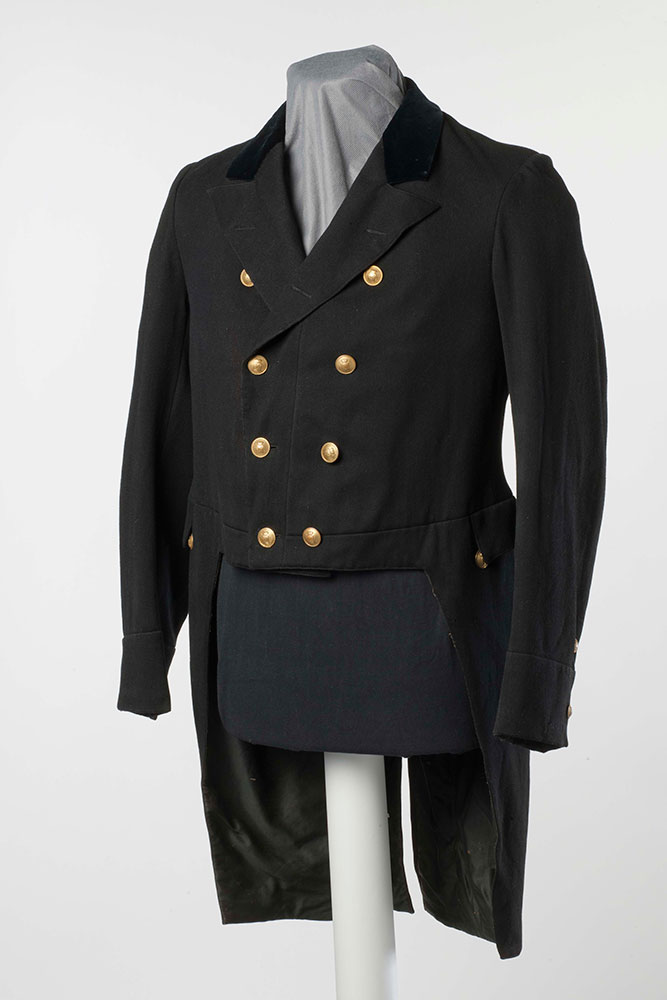
The tailcoat was commonly worn by civil servants in the early 19th century. Finnish provincial servants, including crown vogts and sheriffs, wore this kind of coat as their uniform. At the middle of the century, the tailcoat was eventually replaced by the surtout in daily use, but it remained in use as a coat for festive occasions. Image: Museokuva Matti Huuhka.
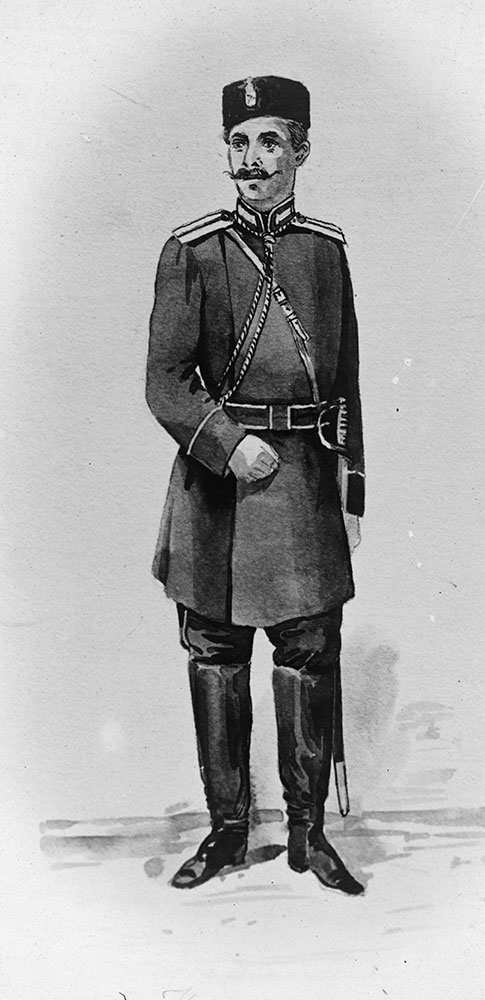
A Russian-style uniform for city policemen was introduced in 1903. The uniform included a long dark green coat with concealed buttons and a belt of fabric. The piping of the cuffs and collar was orange in colour, and so were the edges and bands of the shoulder straps. The uniform was often called the "Bobrikoff uniform" after Governor-General Nikolay Bobrikov, who was carrying out an unpopular policy of russification.
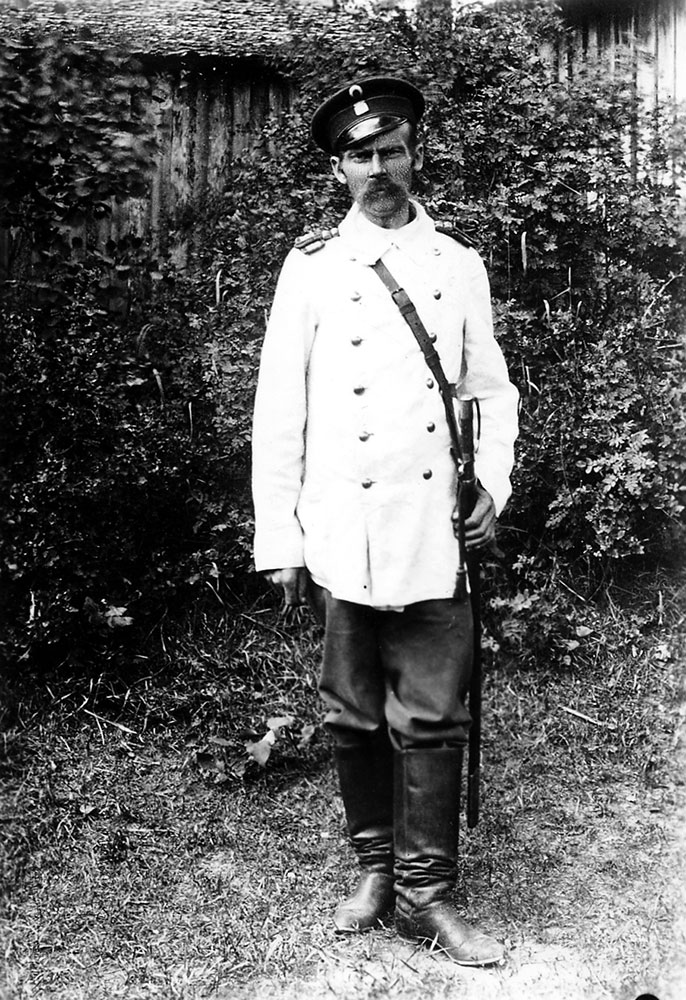
A lighter summer coat was first introduced in the 19th century. The countryside police uniform of 1900 and the city police uniform of 1903 both included a white summer coat with buttons in two rows and shoulder straps with orange bands. Constable Olenius of Pertteli, early 20th century.
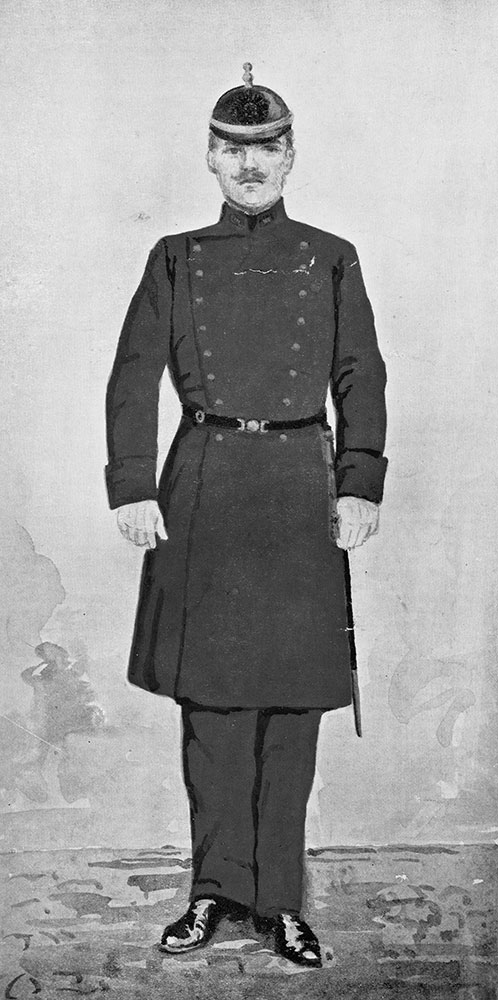
A western-style uniform for city policemen was introduced in 1906. The uniform included a calf-length surtout coat. The colour of the uniform was officially dark blue, but in practice, the uniforms were very dark in colour. The surtout coat was used above all by regular constables. The officer's number was attached to the collar on both sides.
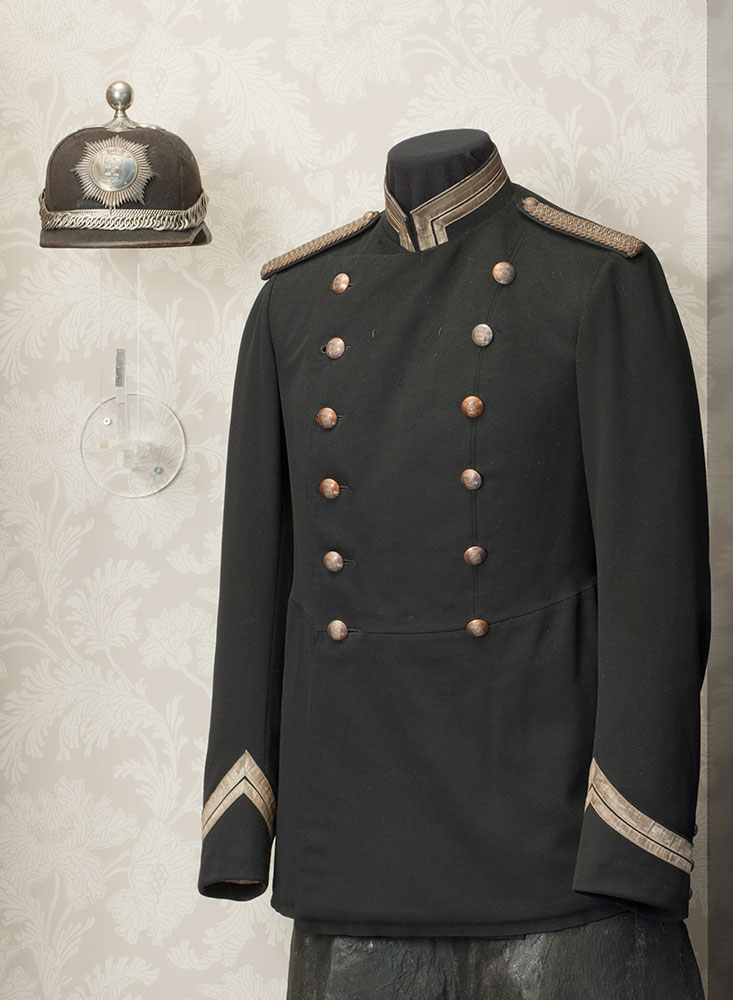
In addition to the surtout, uniform m1906 included a short coat that was mostly worn by commanding officers and mounted officers. The typical headwear worn with this uniform was the pickelhaube with a rounded metal spike. Coat of a mounted chief inspector on display at the Police Museum in 2012. Image: Museokuva Matti Huuhka.
1 / 34